How to play Cricket Duel
- One player bowls and the other bats; each innings is two overs.
- Bowler: drag to set the line and pace, then let go.
- Batter: tap SWING as the ball reaches the bat.
- Swap roles for the second innings and chase the target.
- Score more runs to win; a tie goes to a super over.
Cricket Duel rules
Innings
- Each innings is 2 overs of 6 balls, ending early at 3 wickets. Roles swap for the second innings.
- The side batting second needs the first innings' runs plus one, and wins the moment it gets there.
- Who bats first is random in a new match; on a rematch the player who lost bats first.
Bowling
- Drag in your half: sideways sets the line, further toward the batter sets the pace. Let go to bowl. If you take longer than about 2.5 seconds, the ball goes with what you have set.
- Faster balls narrow the batter's timing window, but above medium pace the ball can drift off your line.
- A ball wide of the stumps also narrows the window, but it can never bowl the batter out.
Batting
- Tap SWING once, as the ball reaches the bat. Only your first swing counts.
- Perfect timing scores 6, good timing 4, slightly early 2 and slightly late 1.
- Far too early and you are caught. Missing a ball at the stumps, or not swinging at it, is bowled. Missing a ball wide of the stumps is a dot ball.
- There are no wides, no-balls, leg before wicket or run-outs.
Ties
- Level scores go to a super over: one over each and one wicket, with the side that batted second batting first. Up to 3 super overs are played.
- If still level, fewer wickets lost wins, then more sixes, then a coin toss. There is no draw.
Cricket Duel tips
Late beats early
A slightly late swing still edges a run, but a swing far too early is caught. When unsure, wait a fraction longer.
Leave the wide ones
A ball outside the stumps can never bowl you. Letting it go costs only a dot ball, which is cheaper than a mistimed swing.
Change pace as the bowler
Two quick balls set the batter's rhythm; a slower one next often throws their timing completely.
Bowl fast balls straight
Pace makes the ball drift, so a fast ball aimed near the edge may end up wide and harmless. Aim your quick balls at the stumps.
Chase the target, not sixes
When batting second, look at what you need. Three wickets end your innings, so a steady four can beat a risky six.
Where to play Cricket Duel
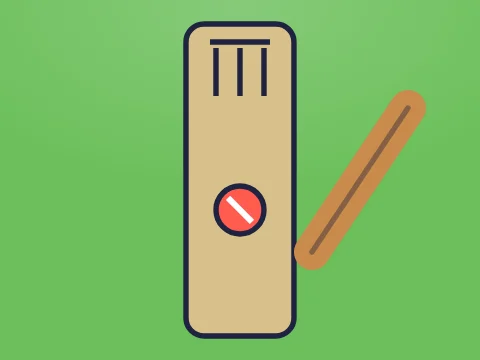
Duo Clash
Two players, one phone
- Sit face to face and both play at once in your own half: the bowler drags, the batter taps the SWING strip at the bottom of their half. A pace chip in km/h follows the bowler's drag.
- Option: Timing bar on (default) or off. Off hides the moving cursor and leaves only the green zone, so you time the ball by eye.
- If play is interrupted while a ball is in the air and nobody has swung, the ball is bowled again, once per player per innings.
- Bolt, the bot, both bowls and bats and only sees each ball's pace and line once it is bowled. Easy bowls slower and swings early or late; Normal times most swings well; Hard bowls quicker, slips in slower balls and times closely but never perfectly.
- Cricket Duel is a timing game, so it plays on one phone or against Bolt, not online. In a tournament the timing bar is always on and who bats first alternates.
Questions about Cricket Duel
How do you hit a six in Cricket Duel?
Tap SWING with perfect timing, right as the ball meets the bat. Good timing gives a four; slightly early or late gives two or one.
What happens if the scores are level?
A super over decides it: one over and one wicket each. Up to 3 can be played, then fewer wickets lost, more sixes and finally a coin toss break the tie.
Are there wides and no-balls?
No. There are also no leg before wicket decisions or run-outs; you are out only by being caught or bowled.
Facts checked against the game's own design documents on .